
BUTYL METHOXYDIBENZOYLMETHANE
Synthetic organic UV-A filter (dibenzoylmethane derivative)
BUTYL METHOXYDIBENZOYLMETHANE is produced by organic synthesis from methoxybenzoic acid and benzoyl chloride. Learn everything about its origin, effect, and the best application in your daily care routine here.
viewBox="0 0 24 24" fill="none" width="32" height="32" aria-hidden="true">
Butyl methoxydibenzoylmethane, better known as avobenzone, is the only organic UV filter that covers the complete UV-A spectrum (320-400 nm) — making it indispensable for true broad-spectrum sun protection. Approved by the FDA in 1988 as the first broad-spectrum UV-A filter, avobenzone revolutionized sunscreen research: previously, SPF products could only prevent sunburn (UV-B), but not skin aging, pigment spots, or UV-A-induced DNA damage. The problem: avobenzone is photolabile — it decomposes under UV light into less effective molecules. That's why you almost always find it today in combination with photostabilizers like octocrylene, ethylhexyl methoxycinnamate, or newer technologies such as diethylamino hydroxybenzoyl hexyl benzoate (Uvinul A Plus). In modern, photostable formulations, avobenzone is the gold standard for UV-A protection — essential for preventing photoaging, melasma, and long-term UV damage.
viewBox="0 0 24 24" fill="none" width="32" height="32" aria-hidden="true">
It is produced by organic synthesis from methoxybenzoic acid and benzoyl chloride. Approved by the FDA in 1988 as the first broad-spectrum UV-A filter, it is still considered the gold standard for UV-A protection (320-400 nm). In modern cosmetics, extraction and processing are subject to strict quality standards according to the EU Cosmetic Regulation (EC) No. 1223/2009. RAU Cosmetics only sources cosmetic-grade raw materials from certified suppliers.
viewBox="0 0 24 24" fill="none" width="32" height="32" aria-hidden="true">
Absorbs UV-A radiation (peak at 357 nm) through enol-keto tautomerism: the molecule switches between two structural forms and thereby converts UV energy into harmless heat. Problem: this conversion is reversible, but under UV light, avobenzone decomposes after 30-60 minutes (photodegradation). Therefore, it is almost always combined with photostabilizers such as octocrylene, ethylhexyl methoxycinnamate, or diethylamino hydroxybenzoyl hexyl benzoate, which stabilize the structure.
viewBox="0 0 24 24" fill="none" width="32" height="32" aria-hidden="true">
How it works on your skin
Broad-Spectrum UV-A Protection
Only organic filter that covers the complete UV-A spectrum (320-400 nm). UV-A I (340-400 nm) penetrates into the dermis and causes 80% of visible skin aging by destroying collagen and elastin. Avobenzone neutralizes this radiation by converting it into heat energy before photochemical damage can occur.
Prevention of Photoaging
UV-A generates reactive oxygen species (ROS) in fibroblasts, which activate matrix metalloproteinases (MMPs) — enzymes that break down collagen. Studies show: daily UV-A protection with avobenzone reduces the formation of new wrinkles by up to 24% within one year. Without a UV-A filter, SPF products only offer half the protection.
Prevention of Hyperpigmentation
UV-A activates tyrosinase and stimulates melanocytes far more than UV-B. Melasma and post-inflammatory hyperpigmentation worsen even under indirect sunlight through window glass (lets UV-A through, not UV-B). Avobenzone blocks this melanin stimulation at the source.
Protection Against DNA Damage
UV-A causes indirect DNA damage through oxidative stress (8-oxo-guanine lesions) instead of direct thymine dimer formation like UV-B. This damage accumulates over years and increases the risk of skin cancer. Avobenzone reduces oxidative stress in keratinocytes by up to 70% (in vitro).
Protection for Light-Sensitive Skin
In the case of photoallergic reactions, polymorphic light eruption (PLE), or medication-induced photosensitivity (e.g., retinoids, antibiotics), UV-A is the main trigger. Avobenzone is essential for patients who develop symptoms even in the shade or through clothing.
Who is it for?
Offers the broadest UV-A protection of all approved filters — indispensable for preventing skin aging and pigment spots, particularly critical for skin types I-II.
UV-A radiation penetrates deep into the dermis and destroys collagen and elastin. Avobenzone is the only organic filter that covers the entire UV-A spectrum.
UV-A triggers melanogenesis more strongly than UV-B. Without UV-A protection, pigment spots cannot be prevented even with SPF 50.
In your routine
In the morning as the last step
Apply sunscreen containing avobenzone after care (15-30 min. before sun exposure). Use at least 2 mg/cm² — this corresponds to about 1/4 teaspoon for the face/neck. Less product = exponentially weaker protection.
Reapply every 2 hours
Avobenzone decomposes under UV light (photodegradation). Even photostabilized formulations lose protective effect after 2 hours. In case of water contact or sweating, renew immediately.
Do not mix with unstable ingredients
Avobenzone is destabilized by certain oils (e.g., mineral oil without stabilizers) or high pH values. Always use sunscreen as a separate product, not as a 2-in-1 moisturizer with UV protection.
Even when the sky is overcast
UV-A penetrates clouds and glass almost unhindered (up to 95%). Even in winter or in the office by the window, you need UV-A protection. UV-B varies with the season, UV-A remains constant.
Frequently Asked Questions
Why is avobenzone often referred to as 'unstable', and is that a problem?
Avobenzone decomposes under UV light into less effective molecules (photodegradation), whereby protection drops drastically after 30-60 min. Modern formulations solve this through photostabilizers like octocrylene, ethylhexyl methoxycinnamate, or newer technologies like TriAsorB. Look for product descriptions with 'photostabil' or 'long-lasting UV-A protection'. You can recognize unstable formulations by the cream becoming yellowish or smelling unpleasant after application.
Can avobenzone trigger allergic reactions or skin irritation?
Avobenzone itself is well tolerated, but its decomposition products (in unstable formulations) can trigger photoallergic reactions — skin rashes that only occur on sun contact. About 1-2% of the population reacts sensitively. If you develop redness after sunscreen application, test products with mineral filters (zinc oxide, titanium dioxide) or newer organic alternatives such as Tinosorb S/M. Avobenzone is not comedogenic enough to trigger acne (Grade 2).
Why is UV-A protection more important than the SPF value?
SPF only measures UV-B protection (sunburn). UV-A does not cause sunburn, but penetrates 30-50 times deeper into the skin and destroys collagen, DNA, and triggers melanin production — the main causes of wrinkles, pigment spots, and skin cancer. An SPF 50 product without a UV-A filter only protects to 50%. In the EU, UV-A protection must be at least 1/3 of the SPF value (critical wavelength ≥370 nm), but that is a minimum. Avobenzone provides the broadest UV-A protection of all organic filters.
Can I combine avobenzone sunscreen with vitamin C or retinol?
Yes, but timing is important. Vitamin C (L-ascorbic acid) and avobenzone reinforce each other — vitamin C neutralizes free radicals that arise despite the UV filter. Apply vitamin C serum in the morning before sunscreen. Never use retinol in the morning (photosensitizing), only in the evening. Avobenzone protects against UV damage during the day, retinol repairs at night. This combination is the gold standard of anti-aging dermatology.
Why does avobenzone sometimes stain clothes yellow?
Avobenzone reacts with iron in tap water (or sweat) and forms yellow chelate complexes. This happens mainly with unstable formulations or if you don't let the cream absorb completely before putting on clothes. Solution: 15 min. absorption time before dressing, wash clothes with chelate-friendly detergents (no iron-containing stain removers), or switch to avobenzone-free alternatives (Tinosorb, Mexoryl).
Discover the Power of BUTYL METHOXYDIBENZOYLMETHANE
Find the right RAU Cosmetics product for your individual skin care routine.
Discover all active ingredients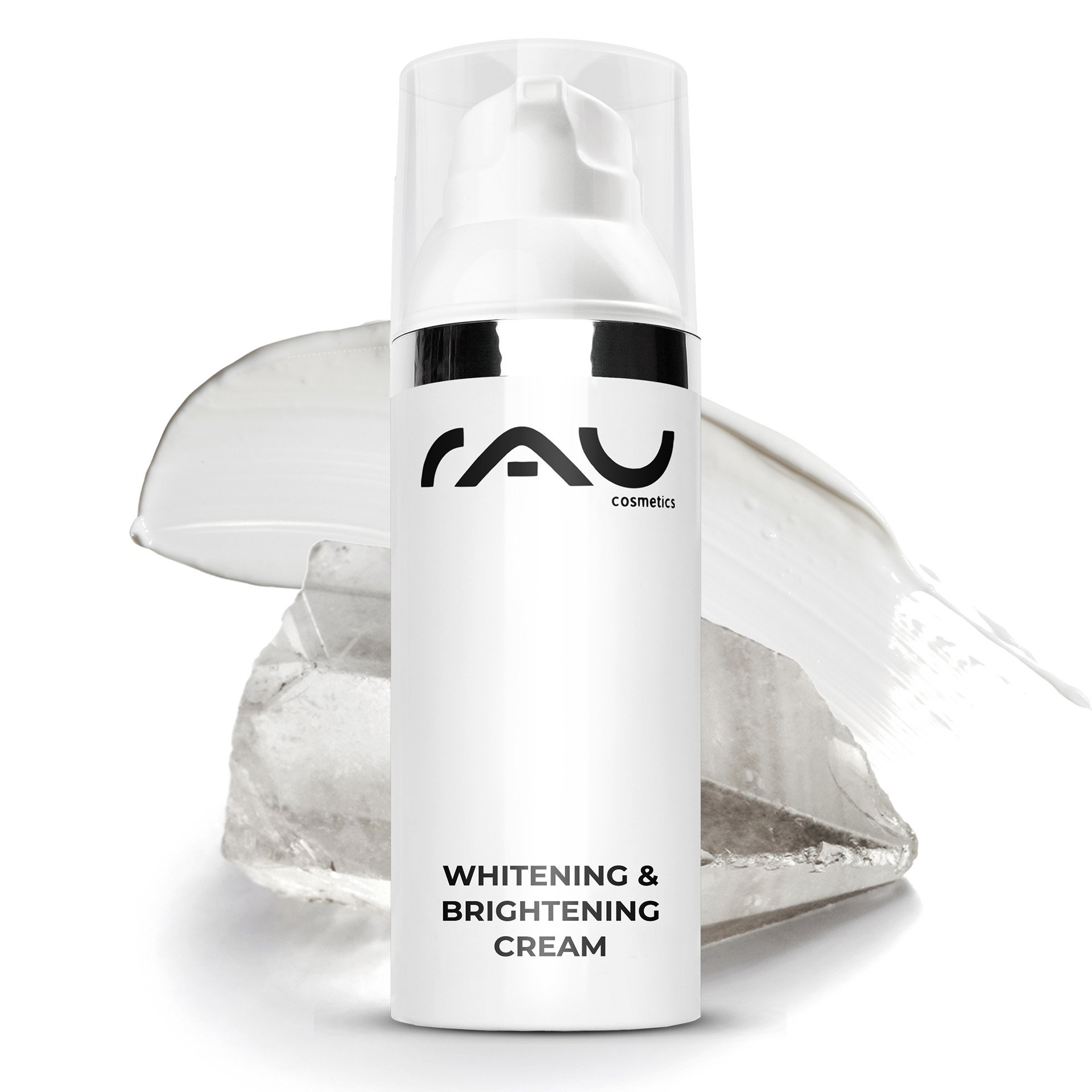
Content: 0.05 Liter ($780.40* / 1 Liter)
EMPFOHLEN FÜR RETINOL
RAU Cosmetics Retinol Serum Roll-On
Entwickelt für trockene & reife Haut — präzise Retinol-Anwendung mit Ceramid-Puffer.
4.78 / 5 · 211 Bewertungen
Zum Retinol SerumHäufige Fragen zu Retinol
Ab wann sieht man Ergebnisse mit Retinol Serum?
Erste Verbesserungen der Hauttextur nach 4 bis 6 Wochen. Anti-Aging-Effekte wie weniger Falten und mehr Festigkeit nach 12 bis 16 Wochen.
Kann ich Retinol Serum täglich anwenden?
Start mit 2x pro Woche abends — nach 4 Wochen auf 3 bis 4x steigern. Empfindliche Haut: 1x wöchentlich beginnen. Sonnenschutz am Folgetag ist Pflicht.
Retinol vs. Bakuchiol — was ist besser?
Retinol ist der klinisch am besten belegte Anti-Aging-Wirkstoff. Bakuchiol wirkt ähnlich, ist pflanzlich — ideal für Schwangere und sehr empfindliche Haut.