TL;DR: Natural cosmetics describes the origin of the ingredients (predominantly natural, often organic). Vegan simply means: no animal-derived ingredients — whether natural or synthetic. The two terms don't necessarily overlap. A vegan cream can be full of synthetic substances, while a natural cosmetic can contain beeswax or lanolin. If you really want to understand what's in your skincare, don't look at the front label — look at the INCI list on the back.
Why these terms confuse you so often
"Vegan natural cosmetics" — you see this word combination almost everywhere today: on drugstore shelves, in advertising, in beauty magazines. It sounds like a single, clearly defined category. It isn't. "Vegan" and "natural cosmetics" are two completely different concepts that happen to be marketed together often — because both target the same buyer's desire: for skincare that feels good, and is ethical and healthy.
If you want a day cream that matches your values, you first need clarity on what these words actually promise — and where they stop. Because the difference between "vegan" and "natural cosmetics" determines whether your skincare contains beeswax, mineral oil, a synthetic preservative, or a certified plant oil.
We'll take you step by step through both terms — showing you what they really mean, where they overlap, and where they contradict each other.
Natural cosmetics — what the word really means
"Natural cosmetics" is not a legally protected term in Germany. Any manufacturer can call their product that, as long as they don't violate the general prohibition on misleading claims. The term only becomes reliable through private certifications — labels like NATRUE, BDIH, COSMOS Natural or COSMOS Organic. These standards define exactly which ingredients are allowed and which aren't.
What these labels broadly have in common:
- Raw materials predominantly come from plants, minerals or controlled animal production (such as beeswax, honey, lanolin from wool).
- Petroleum-based ingredients like Paraffinum Liquidum, petrolatum or silicones are banned.
- Synthetic fragrances and dyes are banned or strictly limited.
- Certain preservatives — such as parabens and formaldehyde releasers — are banned.
- Genetic engineering is off-limits.
Important: natural cosmetics is not automatically organic. "COSMOS Natural" allows certified natural raw materials — but not necessarily in organic quality. Only "COSMOS Organic" requires a defined minimum share of organic raw materials.
And one more common misunderstanding: natural cosmetics is not automatically vegan. Honey, beeswax, milk proteins or lanolin are standard in many classic natural cosmetics creams. They count as "natural" — but not as "animal-free".
Vegan cosmetics — what the word really means
"Vegan" refers exclusively to the ingredients: it must contain no animal-derived components. Full stop. The word says nothing about origin, nothing about organic quality, nothing about mineral oil, nothing about microplastics. A vegan cream can be made 100% from synthetic substances, mineral oil and PEG compounds — and is still correctly labelled "vegan".
Animal-derived components that commonly appear in cosmetics and are excluded from vegan products:
- Cera Alba (beeswax) and Mel (honey)
- Lanolin from sheep's wool
- Squalane of animal origin (today usually derived from olive oil — but not always)
- Cochineal or carmine (a red dye from scale insects)
- Collagen or elastin of animal origin
- Silk proteins (Sericin, Serica)
- Milk proteins, honey extracts, caviar extracts
Certified vegan cosmetics often carry the V-Label or a seal from The Vegan Society. If you truly value animal-free skincare, look explicitly for these certifications — the simple claim "vegan" on packaging isn't standardised. You can check it yourself by reading through the INCI list. We've explained in detail how an INCI list is structured and what to look out for here.
The most common misunderstandings
Vegan doesn't equal natural cosmetics. Natural cosmetics doesn't equal vegan. And neither one equals "better for your skin". Three typical mix-ups you'll regularly find on the drugstore shelf:
Misunderstanding 1 — "Vegan means good for the planet". A vegan cream can be made on a mineral oil base and contain microplastics. Both are compatible with animal welfare — but not necessarily with a cleaner environmental footprint or clean formulation. Read here about what to look out for regarding microplastics in cosmetics.
Misunderstanding 2 — "Natural cosmetics = gentle for every skin type". Essential oils, highly concentrated plant extracts and natural fragrances are frequent triggers for irritation. If you have sensitive skin or are prone to redness, you won't automatically tolerate certified natural cosmetics better than a synthetically formulated cream.
Misunderstanding 3 — "Cruelty-free = vegan". Animal testing for cosmetics has been generally banned in the EU since 2013. "Cruelty-free" is therefore a legal standard in Europe, not an extra quality mark for an individual brand. It also has nothing to do with whether the formula contains animal-derived ingredients.
What does this mean for your choice?
If you really want to choose your skincare based on effect and values, none of these terms alone will help you. They're filters — but not quality seals in the strict sense. What actually gives you orientation:
A clear focus. Ask yourself what matters most to you: no animal-derived ingredients? Then "vegan + certification" is your anchor point. As plant-based and unprocessed raw materials as possible? Then look for "natural cosmetics + organic". Highly concentrated active ingredients against a specific skin concern? Then the first five INCI entries matter more than any marketing label.
A look at the back of the pack. The INCI list tells you more than any advertising claim on the front. Aqua, a good plant oil, Glycerin, a targeted active ingredient like Niacinamide, Bakuchiol or hyaluronic acid (Sodium Hyaluronate) in the first positions are a good start — regardless of what's written large on the tube.
Realism over wishful thinking. A product doesn't work miracles just because it carries a particular seal. What it can do depends on concentration, formulation, your skin condition and consistent use — not the marketing label on the front.
Active-ingredient cosmetics — where RAU Cosmetics stands
At RAU Cosmetics, we deliberately position ourselves as active-ingredient cosmetics. That means: we design our skincare around active ingredients with traceable scientific grounding — such as bakuchiol, niacinamide, colloidal silver, retinol, hyaluronic acid and plant oil complexes.
Important — and we say this openly: we are not certified natural cosmetics and not blanket vegan. In individual formulas we deliberately use ingredients like silk proteins or beeswax because they make sense for the specific care effect. If you're looking for exclusively plant-based cosmetics, you'll be better served by a certified pure-vegan brand.
What we do rule out: microplastics, classic parabens, formaldehyde releasers and mineral-oil base materials in our modern formulas. Animal testing — as mandated EU-wide — does not take place. Manufacturing happens in Germany.
If you'd like to know whether a specific product suits you, the Skin Type Finder is a good first step. Examples from our range whose INCI lists you're welcome to check yourself:
- Bakuchiol Sensitive Day Cream — a plant-based retinol alternative for sensitive skin
- Hyaluronic Plump & Glow Serum — a moisture boost with hyaluronic acid in different molecule sizes
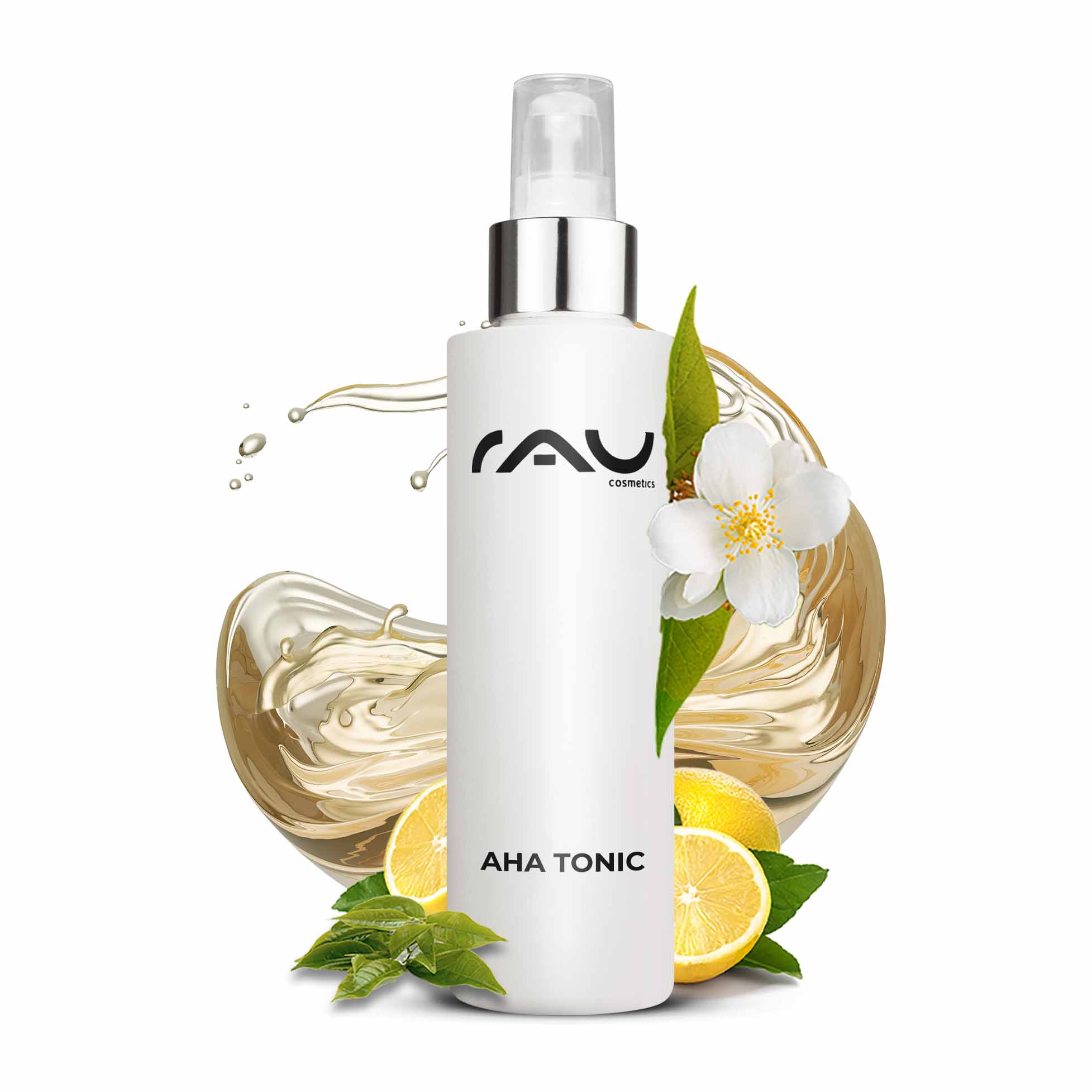
- AHA Tonic — mild fruit acids for gentle exfoliation
- Niacinamide Astaxanthin Roll-On — niacinamide combined with astaxanthin for the eye area
Which path suits you?
There isn't one right answer. If you want to avoid animal-derived ingredients entirely for ethical reasons, certified vegan cosmetics give you a clear compass. If you're looking for the most nature-derived raw materials, recognised natural cosmetics certifications (COSMOS, NATRUE, BDIH, Demeter) are a good guide — knowing that "natural" and "better tolerated" aren't necessarily the same thing.
And if what you're primarily after is a targeted effect against a specific skin concern — dryness, early fine lines, pigmentation spots, redness — you'll often do better with active-ingredient cosmetics, because they're formulated primarily by function rather than origin.
A good test is always the same: turn the tube around. Read the first five INCI entries. See whether there are ingredients among them whose names you recognise — or want to learn to recognise. That's the most honest way to judge a skincare product — regardless of the big promises on the front of the packaging.
What to remember
Natural cosmetics describes the origin of raw materials. Vegan describes the absence of animal-derived ingredients. The two aren't the same. Neither is a guarantee of tolerability, effectiveness or sustainability. If you really want to understand what's in your own skincare, there's no way around a look at the INCI list.
If the question "what actually does my skin good?" matters more to you than the matching label, then the ingredients and their concentration are your decisive factors — not the seal on the front.
Frequently asked questions
Is natural cosmetics always vegan?
No. Classic natural cosmetics often contain beeswax, honey, milk proteins or lanolin. These count as natural but aren't vegan. If you want both, look for the combination of a natural cosmetics certification (NATRUE, COSMOS) with a vegan certification (V-Label).
Are vegan creams better for my skin?
Not automatically. "Vegan" says nothing about skin tolerability. Synthetic preservatives, mineral oil or microplastics can very well be part of a vegan formula. What matters is the full ingredient list, not the vegan label alone.
Is "natural cosmetics" legally protected?
Not in Germany. The term only becomes reliable through private certifications like NATRUE, BDIH, COSMOS Natural or COSMOS Organic. Only these seals guarantee defined standards.
How can I reliably identify vegan cosmetics?
Most reliably through a certified seal (V-Label, The Vegan Society). You can also check the INCI list: typical animal-derived ingredients include Cera Alba, Mel, Lanolin, Sericin, Carmine, as well as milk, collagen or caviar extracts.
Is animal testing for cosmetics allowed in the EU?
No. Since March 2013, testing both finished cosmetic products and individual ingredients on animals for cosmetic purposes has been banned in the EU. "Cruelty-free" is therefore no longer a unique selling point in Europe — it's the legal standard.
Is RAU Cosmetics vegan?
No, not across the board. In individual products, we deliberately use ingredients like silk proteins or beeswax because they make sense for the specific care effect. We position ourselves as active-ingredient cosmetics, not as natural or pure-vegan cosmetics. Animal testing — as legally required — does not take place.