In short: Retinol is one of the best-researched ingredients for more mature skin — but without consistent sun protection, it doesn't just work less well, it can actually make skin issues worse. If you're using vitamin A in your routine, morning UV protection isn't optional. Not "sometimes" — every day.
Why retinol and sun protection are inseparable
You've finally worked up the courage to try retinol. Maybe in the evening, three times a week. After a few weeks your skin feels smoother, your complexion looks a bit more even. Then the first warm day in May arrives — you sit on the terrace for an hour without really thinking about it. The next morning your skin stings, maybe a redness shows up, and in some cases an existing pigmentation spot gets darker.
That's no coincidence. Retinol works actively on your skin — and that active state means your skin can react more sensitively to UV exposure in the days after use. If you're building retinol into your routine, sun protection is no longer optional. It's part of the package.
The good news: it's not rocket science. With the right order and consistent SPF in the morning, you get the most out of your anti-ageing routine — without setbacks.
What retinol does to your skin — and why UV light becomes a challenge
Retinol is a form of vitamin A known in cosmetic use for supporting skin cell renewal. That's exactly its advantage: the outermost skin layer is exchanged faster, which can show up after a few weeks as a smoother-looking complexion. At the same time, faster renewal also means the cells reaching the surface are younger — and therefore more sensitive to UV radiation.
On top of that: retinol itself is sensitive to light and oxygen. If it's used during the day or exposed to direct sunlight, its effectiveness can be reduced. That's the reason retinol is almost always recommended as an evening treatment.
What happens without sun protection? UV-A radiation reaches deeper skin layers and can encourage free radicals — exactly the processes that contribute to skin ageing, the very thing your routine is meant to help with. If you use retinol and skip SPF in the morning, you're undoing part of your own effort. It's like cleaning every day while leaving the windows wide open.
An important clarification: retinol doesn't make your skin "photosensitive" in the medical sense the way some medications do. But it can lower your skin's UV tolerance — and that's reason enough to reach for sun protection every morning. If you want to go deeper into exactly how retinol works, read our full retinol guide.
How to build retinol and SPF into your routine
The logic is simple: retinol belongs in your evening routine. Sun protection belongs in the morning — every day. That doesn't mean you can skip SPF on the days you don't apply retinol. Your skin's light sensitivity doesn't just change on application days — its effect lingers.
Evening routine with retinol
- Cleansing — thorough but not harsh. Make-up and sunscreen need to come off properly before you apply active ingredients.
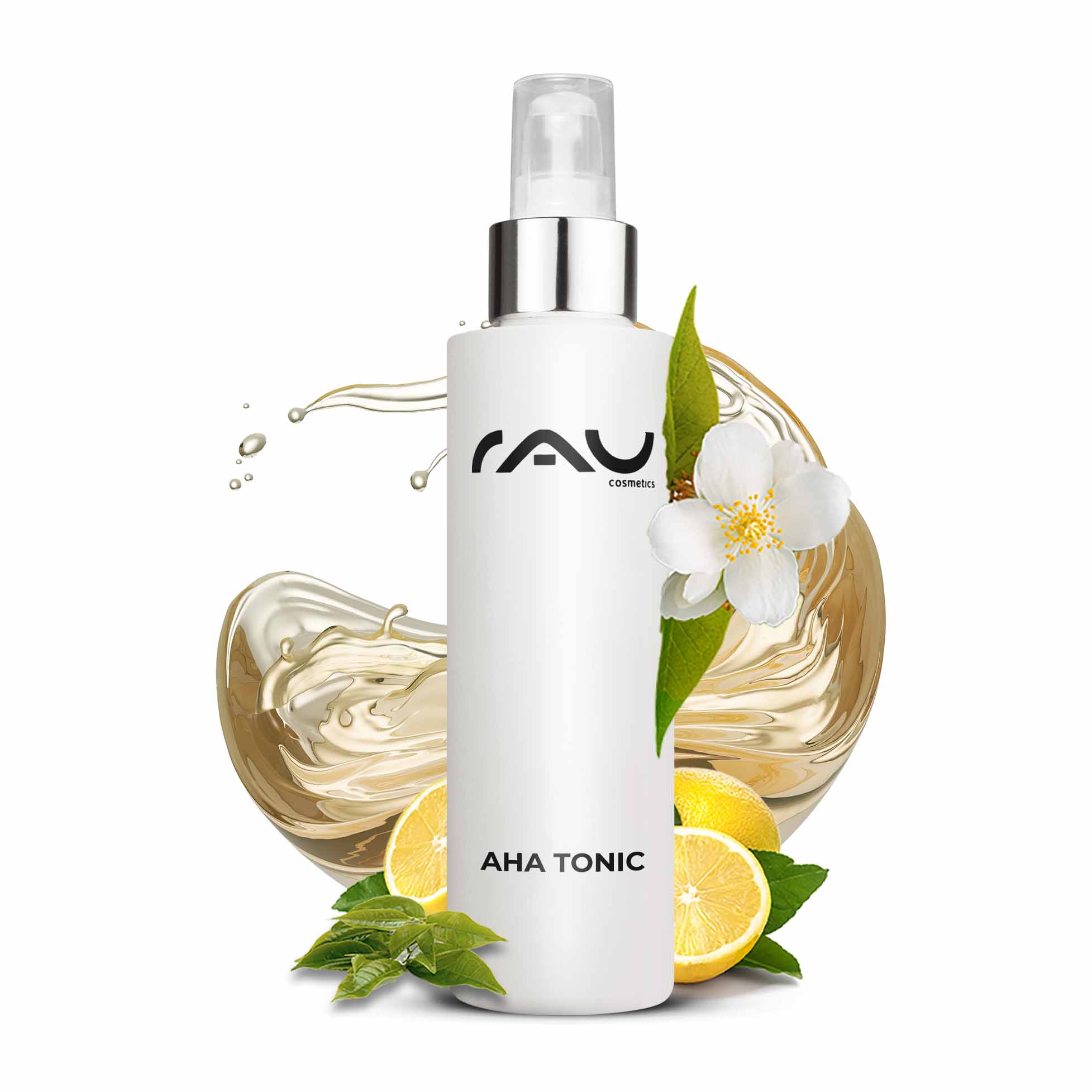
- Optional toner — balances pH and preps the skin. A mild toner is enough.
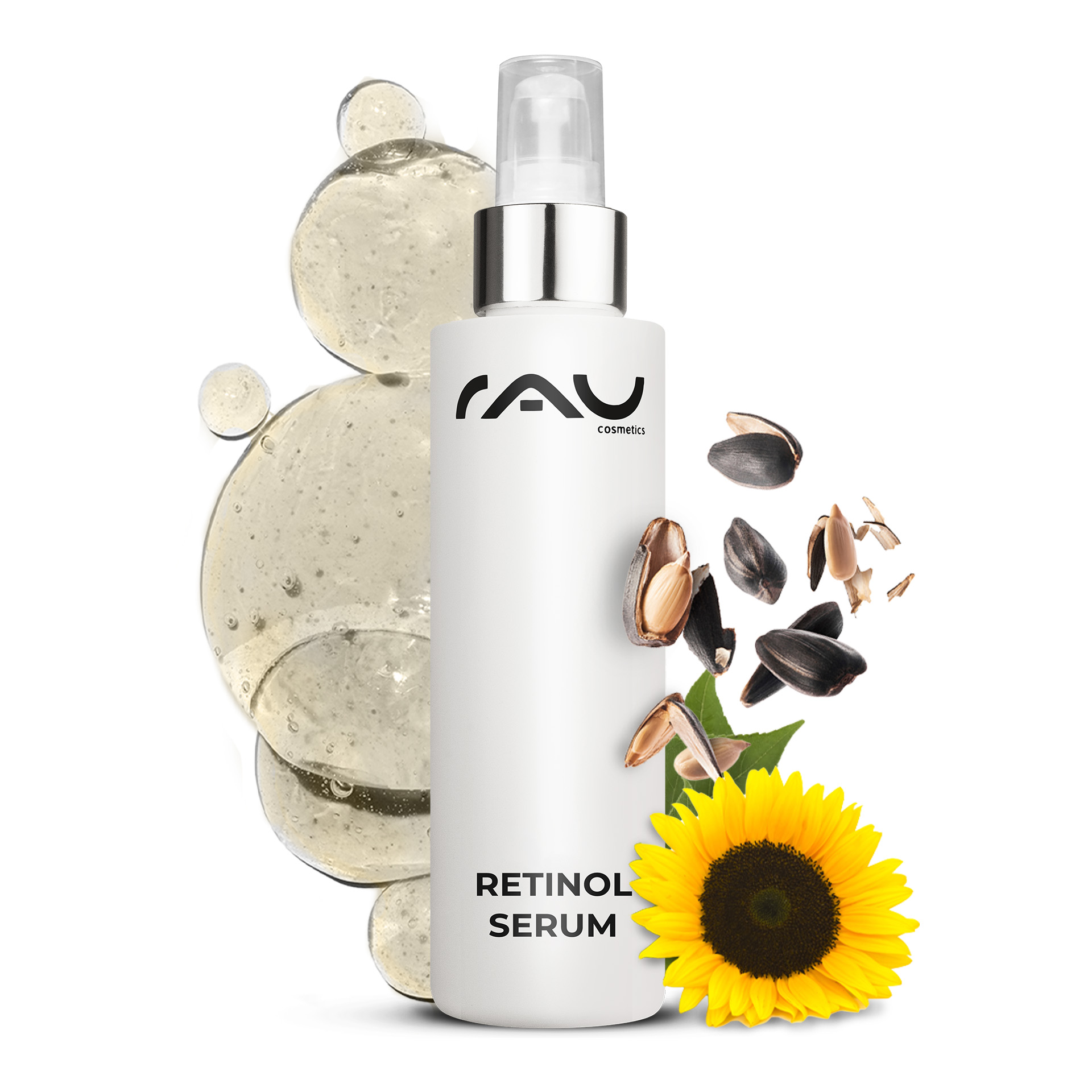
- Serum — applied in a thin layer. The Retinol Serum 100 ml is enough in a pea-sized amount for the whole face.
- Moisturiser — soothes and supports the skin barrier. If you're new to retinol, you can also apply the cream as a buffer before the retinol.
Starting gently means: twice a week, then building up to three times, and daily at the earliest after four weeks (if your skin tolerates it well). If irritation appears, take a break — don't push through it.
Morning routine with SPF
- Gentle cleansing — that's usually all you need in the morning.
- Optional serum — for example a Hyaluronic Plump & Glow Serum as a moisture base.
- Day cream — with enough moisture. For dry skin, the Hyaluron Cream with SPF 10 is a good option — a day cream with built-in light UV protection.
- Sun protection — a dedicated SPF layer. SPF 30 on normal days, SPF 50 on days with more sun exposure (terrace, walks, cycling).
Important: a day cream with SPF 10 is not full sun protection for longer periods outdoors. For everyday situations spent mostly indoors, it can be enough — as soon as you head outside, a dedicated sunscreen belongs on top. We've covered exactly how to judge this in the article "SPF in your day cream — is it enough for everyday life?".
Which SPF suits your retinol routine?
Choosing the right sun protection isn't just about the SPF number — texture, skin type and compatibility with your routine matter too. Here's a practical overview:
For everyday life (indoors with short outdoor stretches)
The Hyaluron Cream SPF 10 is a day cream that combines moisture with a base level of light protection. It can be a sensible foundation for dry to normal skin if you spend most of the day indoors. For a typical office day with a short lunchtime walk, it's a convenient solution.
For days with more exposure (spring, summer, outdoors)
As soon as you're outside for longer — even in the shade, even under cloud cover — a dedicated SPF 30+ belongs on your skin. The Sunscreen SPF 50 with Organic Karanja Oil offers high protection combined with the caring properties of karanja oil. Especially alongside a retinol routine, SPF 50 is a clear advantage for days spent outdoors.
If your skin doesn't tolerate retinol: the bakuchiol alternative
Some skin types react sensitively to retinol — or you might simply want a gentler option during the summer months. That's where bakuchiol comes in: a plant-based ingredient that can offer care effects related to retinol, without affecting light sensitivity. The Bakuchiol Sensitive Day Cream can be used during the day — although sun protection on top still remains a must. You can find more on the comparison in the article "Bakuchiol — the plant-based retinol".
Common mistakes — and how to avoid them
Most problems with retinol routines don't come from the ingredient itself, but from how it's handled. These three issues show up most often in practice:
Mistake 1: Sun protection "only when it's sunny"
UV-A radiation is active all year round — in winter, under cloud cover, and even through window glass. If you use retinol, your skin's UV tolerance is potentially reduced. That's not just relevant on beach days. SPF belongs in your daily routine — full stop.
Mistake 2: Too much, too fast
Anyone who starts retinol and applies it every evening straight away risks irritation, flaky skin and a temporary worsening of their complexion. Skin needs time to adjust to the ingredient. Start with twice a week and build up slowly. If you're after a gentler daytime routine, you can add an ingredient like niacinamide, which can support the skin barrier.
Mistake 3: Forgetting SPF after lunch
Sun protection doesn't work at the same strength all day long. If you're outdoors for longer, reapplying makes sense — roughly every two to three hours. That's especially true if you've been sweating or wiping your face.
Mistake 4: Other acids or exfoliants at the same time
Retinol combined with AHA, BHA or vitamin C acids on the same evening is too much for most skin types. It's better to use them on different days, or stagger the timing (for example, acid in the morning, retinol in the evening — but only if your skin tolerates it and your SPF is on point).
Practical tip: adjust seasonally
Many people make the mistake of running the same routine all year round. It's smarter to adjust seasonally:
- Autumn & winter: run your retinol routine at full strength, SPF 30 in the morning, dedicated sun protection on snow or mountain days.
- Spring: ramp up sun protection, watch your retinol frequency — reduce at the first sign of irritation.
- Summer: if you're outdoors a lot, you can cut retinol back to twice a week or pause it entirely and switch to bakuchiol. SPF 50 becomes your standard.
Still unsure which path suits your skin type? Our Skin Type Finder gives you an assessment in just a few questions.
Frequently asked questions
Can I use retinol in summer too?
In principle, yes — but with discipline around sun protection. Many people reduce their application frequency to twice a week during peak summer and consistently reach for SPF 30 or 50 during the day. If you're outdoors a lot, you can also take a summer break and switch to bakuchiol — the care benefit isn't lost in the process.
Which SPF is necessary with retinol?
For everyday life indoors, SPF 10–15 as a base can be enough, provided you're only outside briefly. As soon as you spend longer periods outdoors, SPF 30 to 50 makes sense. What matters isn't the highest number, but consistency: every day, applied generously.
What should I do if I've accidentally gotten a lot of sun after using retinol?
Pause the retinol for a few days and focus on moisture and barrier-supporting care (for example a hyaluronic serum or a soothing day cream). Observe your skin. Once things have settled, ease back into the routine gradually. For persistent redness or pain, get it checked by a dermatologist.
Is a day cream with SPF enough if I use retinol?
For pure indoor days with short walks, a day cream with a low SPF can be a convenient solution. For days spent outdoors — even when it's overcast — a dedicated sunscreen belongs on top. An SPF day cream is not a full replacement for sunscreen.
Is bakuchiol really an alternative to retinol?
Bakuchiol is a plant-based ingredient that can address care goals related to retinol — and it tends to suit skin types that don't tolerate retinol well. Unlike retinol, bakuchiol can be used during the day and doesn't affect UV tolerance. That said, anyone who skips sun protection anyway is giving up any anti-ageing benefit.
What if I've only just started with retinol?
Then now is the best time to build your SPF routine alongside it. Establishing both habits together is easier than retrofitting each one separately. Start with sun protection on the very first morning after your first retinol application and make it a fixed part of your routine.
Our conclusion
Retinol can be a valuable building block for a mature or balancing skincare routine — but only if sun protection is factored in. The two belong together like a toothbrush and toothpaste: each works alone, but together they make sense. If you use vitamin A in the evening, take care of UV protection in the morning. That way you get what you're hoping for from your routine — without taking away with one hand what you build up with the other.
For more on sun protection, see our pillar article "Sunscreen for the Face" and the comparison "Mineral vs. chemical sunscreen".
Note: Skincare products can support your complexion — they don't replace medical advice. If you have skin conditions, persistent concerns, or are introducing new active ingredients, speak to your dermatologist. The effects described here relate to cosmetic care and may vary individually.