You've probably heard of AHA and BHA before — but do you actually know which acid suits your skin? Fruit acids and salicylic acid are among the most effective ingredients in modern skincare. But they work differently, and picking the wrong one can do more harm than good. In this guide, you'll learn exactly what AHA and BHA are, how they work, and which acid is right for your skin type.
What are AHA and BHA — and how do they differ?
AHA stands for alpha hydroxy acids — a group of water-soluble acids derived from natural sources like fruit, milk or sugar cane. The best-known examples are glycolic acid (from sugar cane), lactic acid and mandelic acid. AHAs work mainly on the skin's surface: they loosen dead skin cells, can refine the complexion and support a more even-looking skin tone.
BHA stands for beta hydroxy acid — in cosmetics, this almost always means salicylic acid. The key difference: BHA is oil-soluble. That means salicylic acid can penetrate deeper into the pore than AHA. BHA can help dissolve excess sebum and clear pores from within. That's why BHA is traditionally considered the better choice for oily skin and blemishes.
In short: AHA works more on the surface and is particularly suited to a dull complexion, fine lines and pigmentation marks. BHA penetrates deeper and can help with clogged pores, blackheads and oily skin.
Which acid suits which skin type?
The right acid depends not just on your skin type, but also on which skin concern you want to address. Here's a quick guide:
AHA is particularly suited for:
- Dry or normal skin — AHA can help support the skin's moisture retention
- Dull, tired-looking skin — gently removing dead skin cells can make skin look fresher
- Fine lines and early signs of skin ageing — AHA can help stimulate cell renewal
- Uneven skin tone and hyperpigmentation — glycolic acid and lactic acid in particular can help fade dark spots with regular use
BHA is particularly suited for:
- Oily and combination skin — salicylic acid can help regulate excess sebum
- Clogged pores and blackheads — BHA can help clear pores from within
- Blemishes and adult breakouts — salicylic acid is known for its calming effect on blemish-prone skin
- Sensitive, blemish-prone skin — BHA tends to be less irritating than AHA, since it works more precisely within the pore
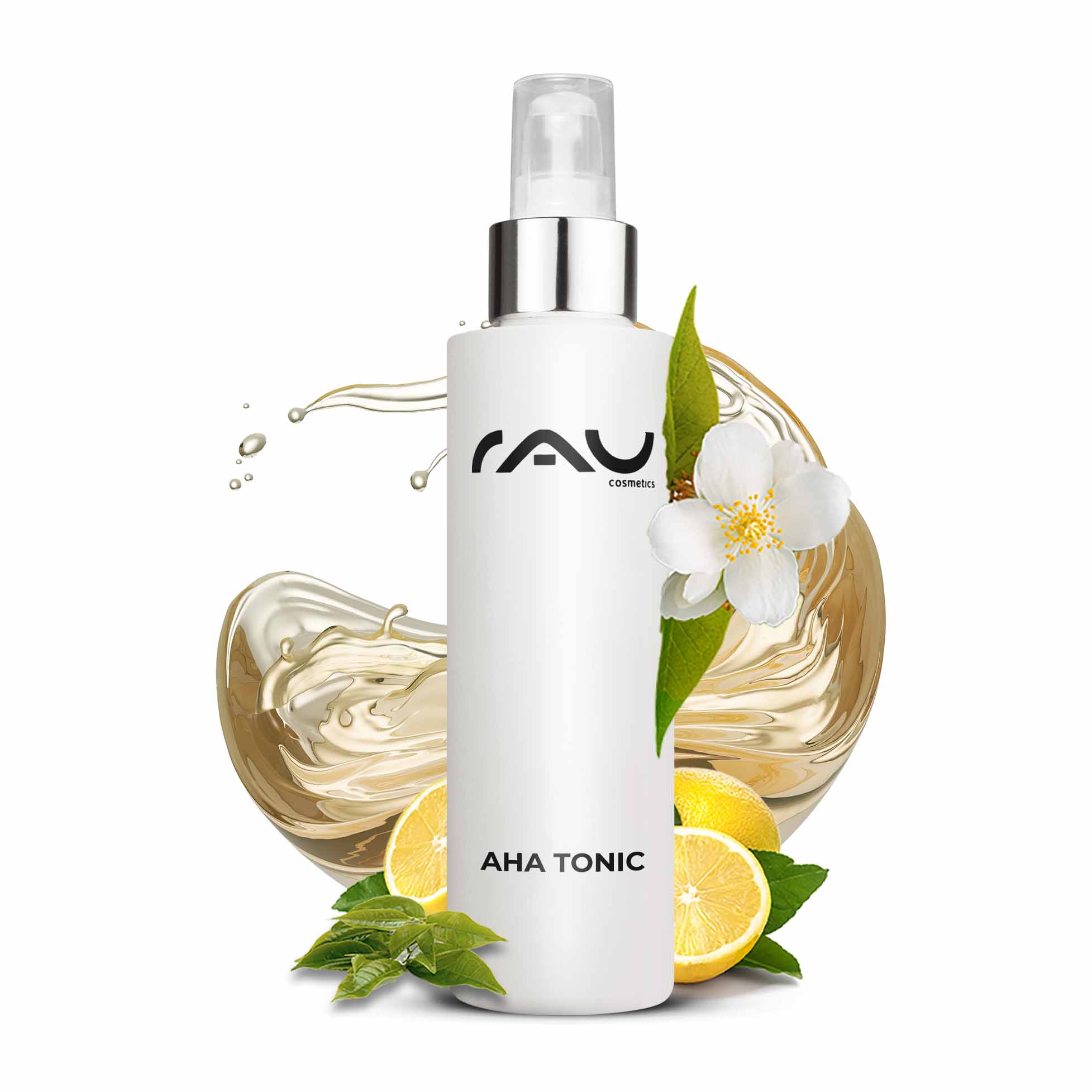
And if both apply to you? Many women deal with a combination of concerns — dry cheeks but an oily T-zone, for example. In that case, a product with mild AHAs that combines both acid types in a balanced concentration can be the best solution. An AHA toner with mild fruit acids is a great way to start — it gently refines the complexion and preps the skin for the care that follows.
Not sure which skin type you have? Our RAU skin type finder can help you find out in a few quick steps.
How to use acid products correctly
Even the best acid won't do much if you use it the wrong way. Here are the most important rules for working with AHA and BHA:
Ease in slowly. Start with a low concentration and use the product only two to three times a week at first. Your skin needs time to get used to the active ingredient. After two to three weeks, you can increase the frequency.
Apply in the evening. AHA in particular can increase your skin's sensitivity to light. So it's best to use acid products as part of your evening routine. The next morning, sunscreen with at least SPF 30 is a must — even on cloudy days.
Get the order right. Acid-based toners go on right after cleansing, before serum and cream. That way, the active ingredient can penetrate the skin optimally while also helping the care that follows absorb better.
Don't combine with: Avoid using AHA or BHA at the same time as retinol — this combination can over-irritate the skin. Use them on alternating evenings instead. Vitamin C combined directly with acids can also irritate sensitive skin.
Listen to your skin. A slight tingling on first use is normal. Burning, strong redness or flaking, on the other hand, are signs that the concentration is too high or that your skin needs a break.
Mild fruit acids in everyday use: why less is often more
A common misconception: the higher the acid concentration, the better the result. The opposite can actually be true. Highly concentrated peels can weaken the skin barrier, dry out the skin and lead to sensitivity in the long run.
Mild fruit acids in a daily toner offer a gentler approach: they support natural cell renewal without overwhelming the skin. A toner with mild fruit acids works like a daily micro-peel — it can gently loosen dead skin cells, refine pores and help the complexion glow.
For women over 35 especially, this gentle exfoliation is particularly valuable: the skin's natural cell renewal slows down with age. Mild AHAs can support this process without stressing the skin.
On top of that, a Niacinamide-based serum like the Niacinamide Astaxanthin Serum can help strengthen the skin barrier and round out the acid routine nicely. Niacinamide is considered a multitasker: it can visibly refine pores, support the skin's moisture balance and even out skin tone.
Common mistakes with acid use — and how to avoid them
Even experienced skincare fans make typical mistakes with acids. Here are the most common ones:
Too many active ingredients at once. AHA, BHA, retinol and vitamin C in one routine sounds like power skincare, but it quickly overwhelms the skin. Fewer active ingredients, used consistently, bring better results in the long run.
Forgetting sunscreen. If you use acids without sunscreen, you risk exactly the opposite of what you want: more pigmentation marks instead of fewer. Sunscreen isn't optional — it's essential.
Impatience. Visible changes take time. After four to six weeks of regular use, you can take stock of the results. Results may vary from person to person.
Treating dry skin with BHA. Salicylic acid can be drying. If your skin already tends towards dryness, reach for AHA instead — lactic acid in particular, which also delivers moisture.
AHA or BHA — which is better?
The honest answer: there's no "better" — only "better for you". Both acids have their strengths, and the right choice depends on your skin type and your skincare goals.
If you're unsure, a mild AHA toner is an excellent place to start. It suits almost every skin type, is gentler than highly concentrated peels, and fits easily into any routine — morning or evening, after cleansing, before serum.
Your skin will thank you for it: with a finer-looking complexion, a fresher glow, and the good feeling of having found exactly the right fit for you.
Discover the AHA Toner from RAU Cosmetics now — with mild fruit acids that gently support your skin without overwhelming it.