
BENZYL SALICYLATE
Synthetic salicylic acid ester (fragrance)
BENZYL SALICYLATE is produced synthetically by esterifying salicylic acid with benzyl alcohol. Learn everything about its origin, effect, and the best application in your daily care routine here.
viewBox="0 0 24 24" fill="none" width="32" height="32" aria-hidden="true">
Benzyl salicylate is a synthetic fragrance from the salicylic acid ester family that has been valued in perfumery for over 140 years. Its characteristic floral-balsamic scent with orchid and hyacinth notes makes it an indispensable component of classic floral compositions. Chemically, it is produced by esterifying salicylic acid with benzyl alcohol — a process that gives it both fragrance and fixing properties. Despite the name, benzyl salicylate has no exfoliating or anti-inflammatory effect like free salicylic acid (BHA). In the EU, it must be declared starting at 0.001% in leave-on products, as about 1-2% of the population can develop contact sensitization.
viewBox="0 0 24 24" fill="none" width="32" height="32" aria-hidden="true">
It is produced synthetically by esterifying salicylic acid with benzyl alcohol. Originally synthesized for the first time in 1876 and used since then as a fixative in perfumery. In modern cosmetics, extraction and processing are subject to strict quality standards according to the EU Cosmetic Regulation (EC) No. 1223/2009. RAU Cosmetics only sources cosmetic-grade raw materials from certified suppliers.
viewBox="0 0 24 24" fill="none" width="32" height="32" aria-hidden="true">
Functions as a fragrance with a floral-balsamic character (reminiscent of orchids and hyacinths). Also acts as a fixative by binding volatile fragrance molecules through Van der Waals forces and slowing down their evaporation rate. Possesses weak UV absorption properties in the UVB range (280-320 nm), but not in sufficient concentration for relevant light protection.
viewBox="0 0 24 24" fill="none" width="32" height="32" aria-hidden="true">
How it works on your skin
Fragrance Fixation
Stabilizes volatile fragrance components in the formulation through intermolecular interactions. Prevents fast evaporation of top notes and ensures a longer-lasting scent on the skin. Particularly effective when combined with citrus and floral scents.
Floral-Balsamic Profile
Gives products a characteristic orchid/hyacinth note with a slightly sweet, herbal undertone. It is often used as a 'bridge' between floral and woody fragrance notes. In low concentrations, it has a rounding and harmonizing effect on the overall composition.
Masking Effect
Covers undesirable chemical or rancid-oily odors of raw materials such as unsaturated fatty acids or peptides. Due to its intense inherent scent, it can neutralize disruptive odor notes even in small amounts (0.01-0.05%) without being intrusive.
Minimal UV Absorption
Absorbs weakly in the UVB range (λmax ~305 nm), but does not contribute significantly to light protection. However, it can be used in sunscreen formulations as a fragrance component without affecting the UV filter performance.
Who is it for?
Well tolerated at low concentrations as a perfume component and gives products a pleasant sensory note without irritation.
Can be used in higher concentrations as there is no known sensitization.
In your routine
As a fragrance component
Already contained in optimal doses in finished cosmetic products. No separate application necessary — the fragrance develops automatically when the product is applied.
Compatibility test
Those prone to fragrance allergies should first test the product on a small patch of skin (e.g., the crook of the arm) and wait 24 hours before applying it over a large area.
Storage of perfumed products
Store products containing benzyl salicylate in a cool place protected from light, as UV light can break down the fragrance molecules over the long term and change the scent.
Frequently Asked Questions
Why is benzyl salicylate on the list of declaration-required allergens?
Although benzyl salicylate does not trigger reactions in the majority of people, it has been classified as a potential contact allergen by the Scientific Committee on Consumer Safety (SCCS). About 1-2% of the European population shows sensitization in patch tests. Therefore, it must be declared separately starting at 0.001% in leave-on products to enable allergy sufferers to make an informed product choice.
Does benzyl salicylate differ from salicylic acid in its effect?
Yes, fundamentally. Salicylic acid (BHA) is a beta-hydroxy acid with keratolytic (horn-dissolving) and anti-inflammatory effects. Benzyl salicylate is an ester of the same acid, but possesses NO exfoliating or anti-inflammatory properties. The esterification changes the molecular structure so significantly that only fragrance properties remain. Hydrolysis to free salicylic acid on the skin does not take place to a relevant extent.
Can benzyl salicylate be used in natural cosmetics?
No, according to current natural cosmetics standards (COSMOS, NaTrue, Demeter), benzyl salicylate is not permissible because it is produced fully synthetically. Some standards only allow nature-identical fragrances (chemically identical to natural molecules) or natural essential oils. Although benzyl salicylate occurs in traces in some floral extracts, it is never isolated from them industrially but is always synthesized.
Is benzyl salicylate broken down in the skin and if so, how?
Yes, slow hydrolysis to salicylic acid and benzyl alcohol takes place through esterases (skin-protein enzymes). Both breakdown products are then further metabolized via Phase I and Phase II metabolism (glucuronidation, sulfation) and excreted renally. The half-life on the skin is about 8-12 hours, which is why the scent is relatively long-lasting.
Can benzyl salicylate affect the effect of other ingredients?
In cosmetic concentrations (below 1%), there are no documented interactions with active ingredients such as retinoids, vitamin C, or peptides. Since it is lipophilic, it can theoretically minimally increase the penetration of other lipophilic substances (carrier effect), but this effect is negligibly small. Caution only when using several fragrances simultaneously — the cumulative allergen load can then increase.
Discover the Power of BENZYL SALICYLATE
Find the right RAU Cosmetics product for your individual skin care routine.
Discover all active ingredients

Content: 0.05 Liter ($900.80* / 1 Liter)


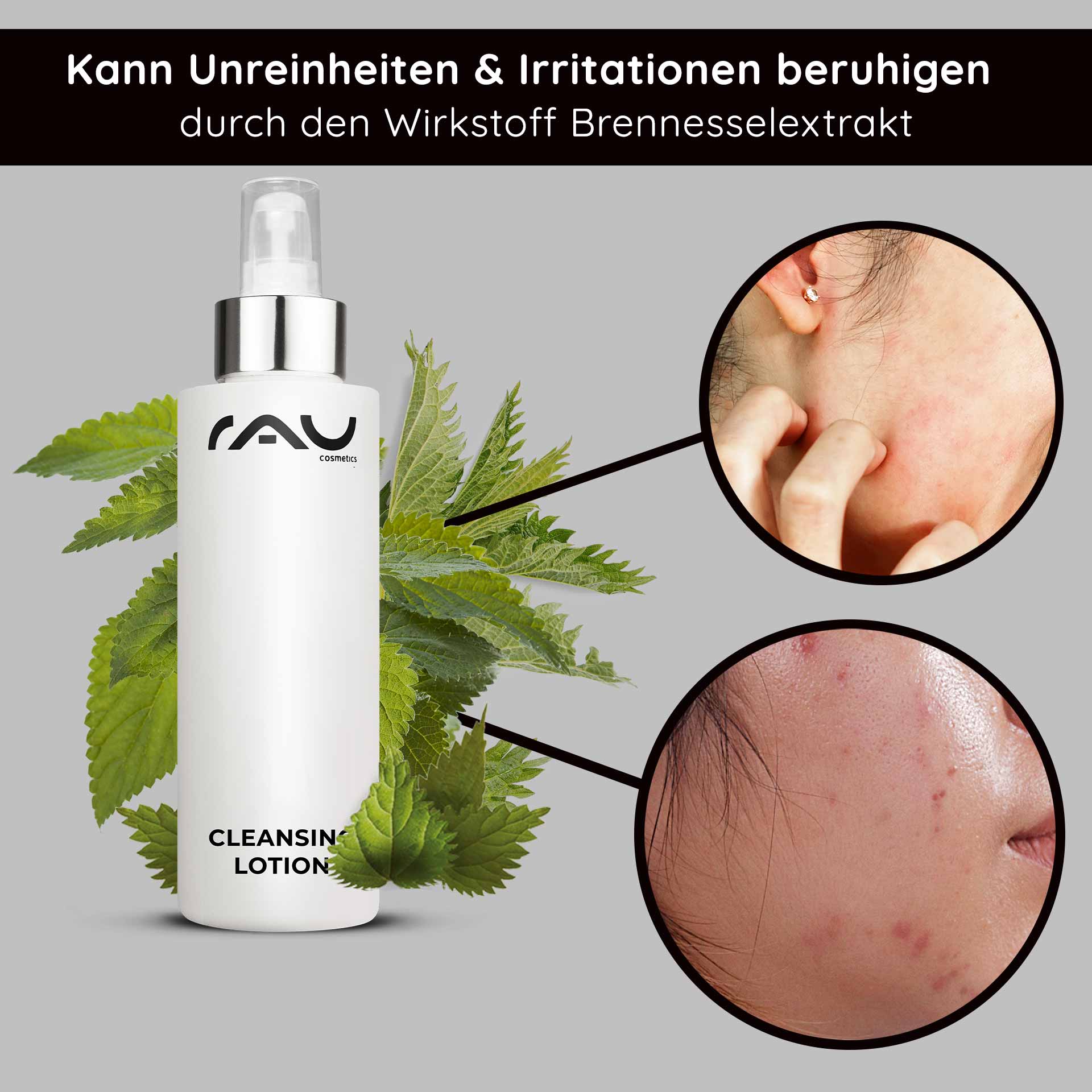
Content: 0.2 Liter ($129.85* / 1 Liter)


Content: 0.2 Liter ($646.80* / 1 Liter)


Content: 0.05 Liter ($780.40* / 1 Liter)


Content: 0.05 Liter ($800.40* / 1 Liter)
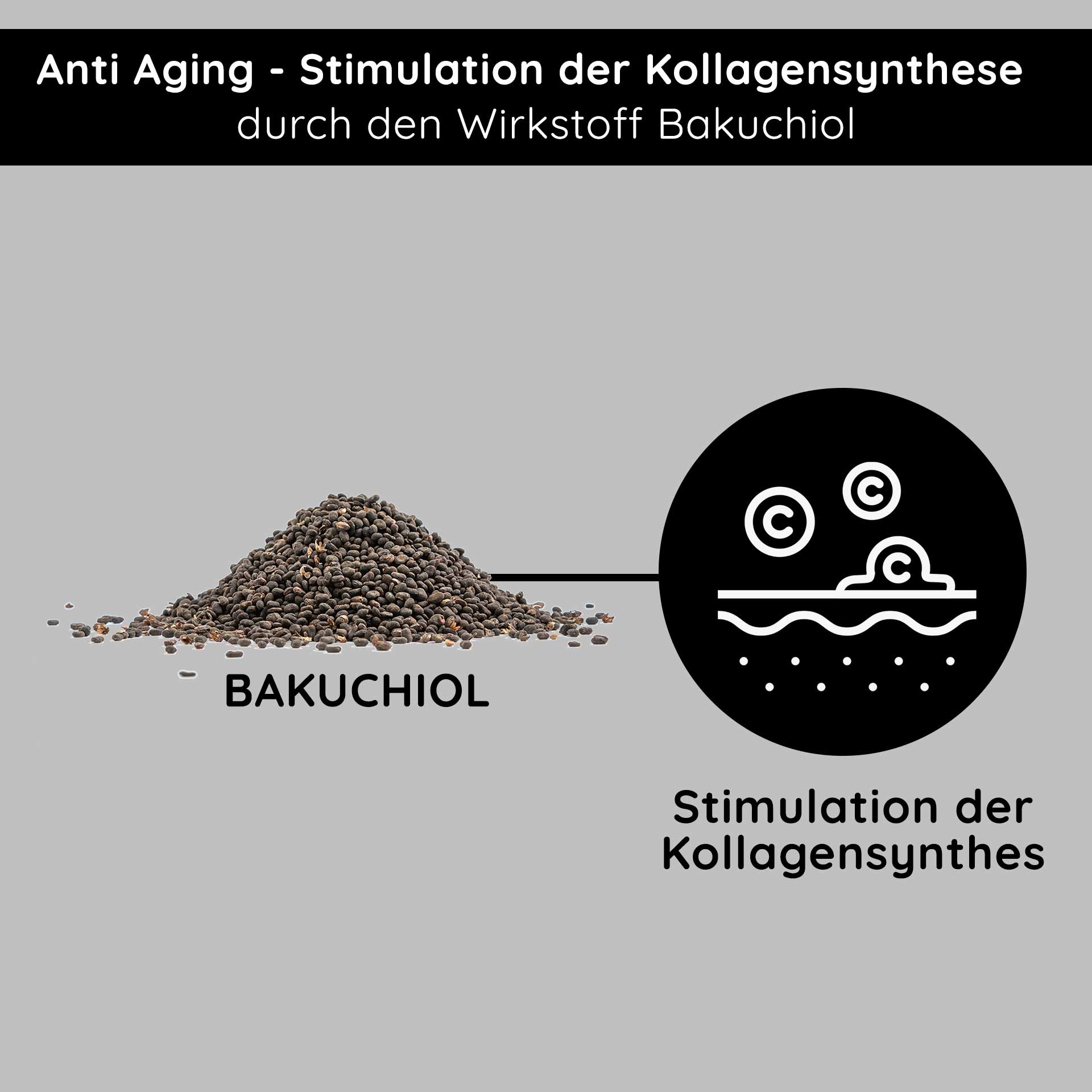
Content: 0.05 Liter ($900.80* / 1 Liter)


Content: 0.2 Liter ($486.15* / 1 Liter)


Content: 0.05 Liter ($519.40* / 1 Liter)
EMPFOHLEN FÜR RETINOL
RAU Cosmetics Retinol Serum Roll-On
Entwickelt für trockene & reife Haut — präzise Retinol-Anwendung mit Ceramid-Puffer.
4.78 / 5 · 211 Bewertungen
Zum Retinol SerumHäufige Fragen zu Retinol
Ab wann sieht man Ergebnisse mit Retinol Serum?
Erste Verbesserungen der Hauttextur nach 4 bis 6 Wochen. Anti-Aging-Effekte wie weniger Falten und mehr Festigkeit nach 12 bis 16 Wochen.
Kann ich Retinol Serum täglich anwenden?
Start mit 2x pro Woche abends — nach 4 Wochen auf 3 bis 4x steigern. Empfindliche Haut: 1x wöchentlich beginnen. Sonnenschutz am Folgetag ist Pflicht.
Retinol vs. Bakuchiol — was ist besser?
Retinol ist der klinisch am besten belegte Anti-Aging-Wirkstoff. Bakuchiol wirkt ähnlich, ist pflanzlich — ideal für Schwangere und sehr empfindliche Haut.